Sargassum vs. Jellyfish: What's Actually in the Water in Cancún? — 2026 Guide
Last updated: May 2026 · Based on USF Sargassum Watch System satellite data
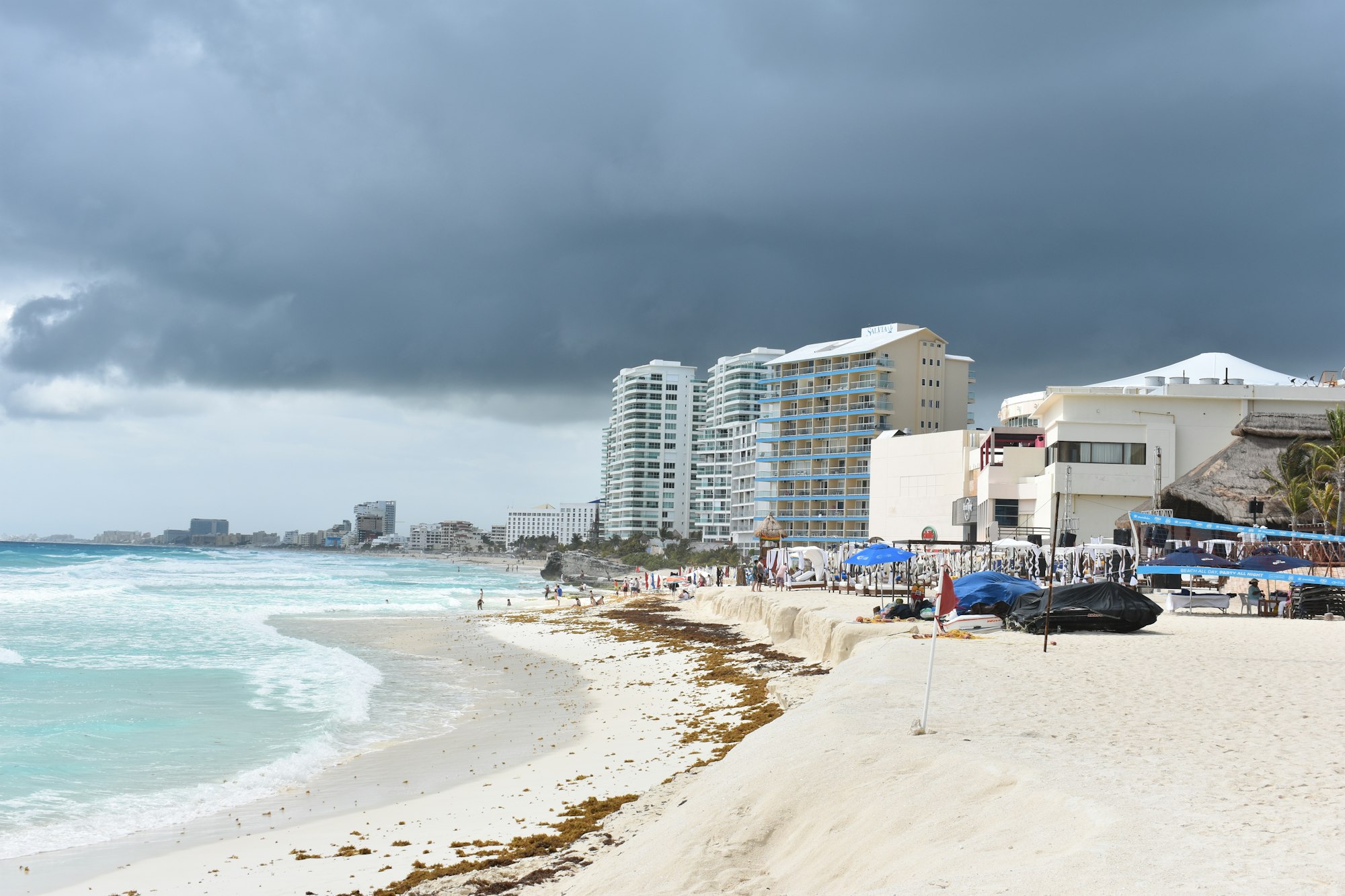
You're standing at the water's edge in Cancún, staring at something brown and stringy floating near your ankles — but is it sargassum seaweed, or something alive that can sting you? It's one of the most Googled questions about swimming in the Mexican Caribbean, and the answer matters before you take another step. This guide breaks down exactly what's in the water, how to tell the difference, and which beaches to watch in 2026.
Check Today's Conditions
Live sargassum status for all 9 beaches — updated hourly.
Sargassum vs. Jellyfish: The Key Differences at a Glance
Most visitors who panic about "something in the water" are actually looking at sargassum — a floating brown macroalgae that has surged in the Caribbean since 2011. But jellyfish do appear in Cancún waters, and confusing the two can lead to unnecessary fear or, worse, a real sting. Knowing what you're dealing with changes everything about how you react.
Sargassum (Sargassum fluitans and Sargassum natans) is a plant-like seaweed with small air bladders that help it float. It forms dense golden-brown mats on the surface and accumulates on shorelines. Jellyfish, by contrast, are animals — gelatinous, often translucent, and capable of delivering a painful sting through their tentacles. They move with ocean currents and drift individually rather than in interlocked mats.
The simplest visual test: if it's brown and stringy and smells faintly of sulfur, it's almost certainly sargassum. If it's a clear or milky dome-shaped blob pulsing slowly in the water, that's a jellyfish. Here's a direct comparison of the key characteristics:
| Feature | 🟤 Sargassum | 🪼 Jellyfish |
|---|---|---|
| Appearance | Brown, stringy, mat-like with small round air bladders | Translucent or milky dome-shaped bell, often with trailing tentacles |
| Movement | Drifts passively in mats on the surface | Pulses slowly through the water column |
| Can it sting? | No — but decomposing mats may harbor small hydroids | Yes — tentacles carry stinging cells (nematocysts) |
| Smell | Rotten egg/sulfur odor when decomposing on shore | No distinctive smell in the water |
| Season (Cancún) | Peak May–October; can appear year-round | Irregular; more common after storms or strong winds |
| What to do | Wade carefully; avoid swallowing water; rinse off after | Exit water immediately; do not rub; rinse with seawater |
What Sargassum Actually Is — and Why It's Everywhere
Sargassum is a natural part of the Atlantic ocean ecosystem. It originates in the Sargasso Sea and in the Great Atlantic Sargassum Belt — a massive equatorial bloom that has been growing exponentially since around 2011 due to a combination of nutrient runoff, warming ocean temperatures, and shifting wind patterns. According to tracking data from the USF Sargassum Watch System, record-level biomass in the tropical Atlantic has repeatedly broken previous highs throughout the 2020s.
When it arrives on a beach, sargassum is harmless to touch in small quantities. The problem comes when it piles up in thick mats and begins to decompose. The decomposition process releases hydrogen sulfide gas — that rotten egg smell — and can deplete oxygen in shallow coastal water. For most healthy adults, casual contact is no more than an annoyance. For people with respiratory sensitivities or open wounds, heavy decomposing mats are worth avoiding.
One nuance that surprises many visitors: sargassum mats are actually rich micro-ecosystems. Sea turtles, juvenile fish, crabs, and dozens of other species live inside them. Occasionally this includes small hydroids — tiny colonial organisms related to jellyfish — that can cause mild itching or a rash if you brush against them. This is sometimes misidentified as a "jellyfish sting," but it is much milder and fades quickly.
Good to Know
Sargassum is not toxic to swim through, but avoid prolonged contact with thick, dark-brown decomposing mats. Rinse off with fresh water after leaving the ocean, and keep children from playing in heavy beach accumulations where hydrogen sulfide levels may be elevated.
Jellyfish in Cancún: What Species Show Up and When
Jellyfish in Cancún are far less common than sargassum but definitely real. The most frequently spotted species in the Mexican Caribbean include moon jellyfish (Aurelia aurita), which are mostly harmless with a mild sting, and the much more serious Portuguese man-o-war (Physalia physalis), which is technically a colonial siphonophore rather than a true jellyfish but is treated as one by most beachgoers. The man-o-war carries a potent sting that can cause significant pain and, in rare cases, allergic reactions requiring medical attention.
Jellyfish presence in Cancún is highly unpredictable and tied to wind direction, ocean currents, and storm activity. They are not a seasonal fixture the way sargassum is. After a norther (a strong northerly cold front) or an offshore storm pushes surface currents toward the coast, jellyfish can appear in large numbers for a day or two before dispersing. Lifeguards at major Hotel Zone beaches fly a purple flag when jellyfish or other marine life hazards are present — always check the flag system before entering the water.
If you're snorkeling or diving rather than just swimming, your risk of encountering jellyfish increases. Tours operating out of Cozumel and Akumal generally brief guests on local marine life hazards before entry. Reputable operators monitor conditions daily.
Beach Flag System — Know Before You Go
- 🟢 Green: Calm conditions, safe to swim
- 🟡 Yellow: Moderate conditions, caution advised
- 🔴 Red: Dangerous conditions, no swimming
- 🟣 Purple: Marine life hazard (jellyfish, rays, etc.)
- ⚫ Black: Beach closed
Which Cancún Beaches Are Most Affected in 2026?
Not all beaches in the Cancún area are equally affected by sargassum, and jellyfish risk also varies by location. Understanding the geography helps you pick the right spot for your trip. The Hotel Zone in Cancún runs roughly north to south, and the two ends behave quite differently. North Cancún — near Punta Cancún and the tip of the Hotel Zone — tends to have better natural water circulation that flushes sargassum away. South Cancún faces the open Caribbean more directly and often accumulates heavier mats during peak season.
Playa Gaviota Azul sits in the middle of the Hotel Zone and is monitored daily. Conditions here can flip quickly depending on wind direction, so checking the live map before heading out is strongly recommended. Further south along the Riviera Maya, Playa del Carmen and Tulum are among the most sargassum-impacted destinations during the May–October season due to their exposure to open Caribbean swells and prevailing easterly winds.
For cleaner water, many locals and experienced travelers head to Isla Mujeres, where Playa Norte sits in a sheltered bay on the island's western side that faces the calmer Yucatán Channel rather than the open Atlantic. Puerto Morelos also benefits from a natural reef that acts as a buffer, though sargassum still makes it through during heavy bloom events.
Consistently Calmer Options
If avoiding both sargassum and jellyfish is your priority, sheltered bays and cenotes (freshwater sinkholes) are your best bet. There is zero sargassum in cenotes, and freshwater means no marine stingers either. Several excellent cenote tours depart daily from Cancún.
Cancún Cenote Tour
Swim in the sacred underground cenotes of the Yucatán Peninsula — crystal clear freshwater, no seaweed.
Book on ViatorBooking via our affiliate link supports this site at no extra cost to you.
Isla Mujeres Catamaran
Cruise across turquoise waters and jump off board to swim and snorkel among the reefs.
Book on ViatorBooking via our affiliate link supports this site at no extra cost to you.
What to Do If You Encounter Sargassum or Jellyfish
If you wade into sargassum, stay calm. Walk slowly to avoid kicking up disturbed water into your face, don't swallow any seawater near thick mats, and rinse off with fresh water when you get out. If you feel itching after contact, it's likely from small hydroids in the mat rather than a true sting — antihistamine cream usually resolves it within an hour. There is no need to seek medical attention for typical sargassum contact.
A genuine jellyfish sting is a different matter. If you feel a sudden sharp burning pain in the water, exit immediately. Do not rub the affected area — this releases more venom from any remaining nematocysts (stinging cells) stuck to your skin. Rinse with seawater, not fresh water. If you have vinegar, apply it to neutralize remaining nematocysts. Remove any visible tentacle material with a card or shell — not your fingers. For moon jellyfish stings, discomfort usually passes within 30–60 minutes. For a suspected Portuguese man-o-war sting, especially with symptoms like chest tightness, difficulty breathing, or widespread swelling, seek medical attention promptly.
Most major hotels along the Hotel Zone keep basic sting treatment supplies at their beach service areas. Don't hesitate to flag down a lifeguard or hotel beach attendant — they handle these situations regularly and are well-prepared.
Cozumel Snorkel & Reef Tour
Explore the famous Mesoamerican Reef — one of the world's best snorkeling sites.
Book on ViatorBooking via our affiliate link supports this site at no extra cost to you.
Frequently Asked Questions
What is the difference between sargassum and jellyfish in Cancún?
Sargassum is a brown, plant-like seaweed that washes ashore in matted clumps and smells like rotten eggs when decomposing. Jellyfish are gelatinous animals with a dome-shaped bell and trailing tentacles that can sting. Sargassum is an annoyance; jellyfish can be a genuine hazard. The easiest visual rule: if it's brown and stringy, it's seaweed. If it's a clear or milky blob, exit the water.
Can sargassum sting you like a jellyfish?
No — sargassum itself does not sting. However, thick sargassum mats can harbor tiny hydroids (distant relatives of jellyfish) that may cause mild skin irritation or itching. This is far less painful than a true jellyfish sting and typically fades within an hour. Rinse with fresh water and apply antihistamine cream if needed.
Are jellyfish common in Cancún?
Jellyfish are not a daily fixture in Cancún the way sargassum is, but they do appear — particularly after storms or strong winds push surface currents toward shore. Moon jellyfish are the most common and relatively mild. Portuguese man-o-war sightings occur occasionally and should be taken seriously. Always check the beach's flag system for a purple flag indicating marine life hazards.
Which beaches have the least sargassum in Cancún?
North Cancún and Isla Mujeres (Playa Norte) consistently see less sargassum than south-facing beaches. Puerto Morelos benefits from a reef buffer. For guaranteed clear water, cenotes and sheltered lagoons are sargassum-free year-round. Check our live beach map for today's real-time conditions across all nine monitored beaches.
What should I do if I get stung by a jellyfish in Cancún?
Exit the water immediately. Do not rub the sting — this releases more venom. Rinse with seawater (not fresh water), apply vinegar if available, and carefully remove visible tentacle material without touching it directly. For mild stings (moon jellyfish), discomfort usually passes within an hour. For severe symptoms — difficulty breathing, chest pain, widespread swelling — seek medical attention immediately. Hotel lifeguards are trained to assist.
Check Live Conditions Now
Updated hourly using satellite data and webcam feeds.
View Live Conditions Map

