Best Beaches in Mexico With No Sargassum — 2026 Guide
Last updated: April 2026 · Based on USF Sargassum Watch System satellite data
Sargassum seaweed has changed how travelers plan beach vacations in Mexico — but it hasn't ruined them. From the pristine Pacific coast to naturally sheltered Caribbean islands, there are still dozens of stunning, seaweed-free shores waiting for you. This guide breaks down the best options so you can book with confidence.
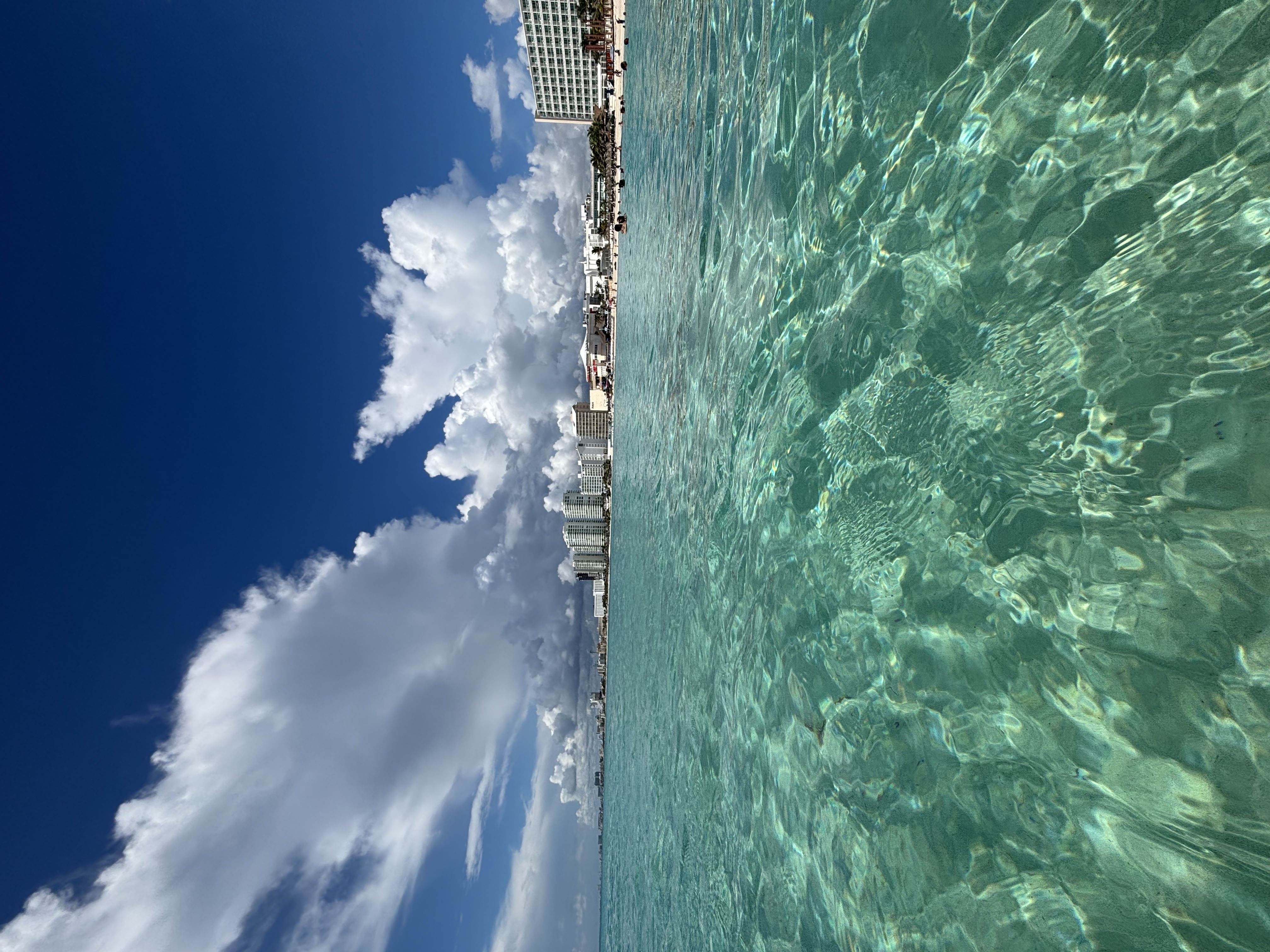
Check Today's Conditions
Live sargassum status for all 9 beaches — updated hourly.
Why Sargassum Matters for Your Mexico Vacation
If you've researched a Mexico beach trip in the last few years, you've almost certainly come across photos of brown seaweed piled along Caribbean shorelines. That's sargassum — a floating brown algae that travels in massive mats across the Atlantic Ocean before washing ashore on Caribbean-facing beaches. According to USF's Sargassum Watch System, 2026 satellite imagery shows another active season forming in the tropical Atlantic, which means the Caribbean coast could see moderate to heavy arrivals between May and August.
The good news? Sargassum doesn't affect every beach in Mexico equally. The Pacific coast is completely sargassum-free — the seaweed simply doesn't grow there. And even within the Caribbean, certain islands and north-facing beaches experience far less seaweed than exposed eastern coastlines. Understanding these patterns is the key to planning a sargassum-free vacation.
Below, we've organized every top pick into two categories: Pacific coast destinations (always 100% clear) and Caribbean spots that stay clean most of the year. We also include a comparison table so you can weigh your options side by side.
Mexico's Pacific Coast: Always Sargassum-Free
Zero sargassum risk — Pacific currents do not carry sargassum. These beaches are clear year-round.
Puerto Vallarta & the Riviera Nayarit
Puerto Vallarta sits on Banderas Bay along Mexico's central Pacific coast. Its beaches — from the downtown Malecón strip to secluded Yelapa cove — never see sargassum. The Riviera Nayarit extension to the north offers surfer-friendly Sayulita and the upscale Punta Mita. The water is warm, visibility is excellent, and the only thing washing ashore is the occasional coconut.
This region also has world-class snorkeling at the Marietas Islands and Los Arcos Marine Park. If you want that classic turquoise-water Mexico experience without any seaweed anxiety, Puerto Vallarta should be at the top of your list.
Los Cabos & the Baja Peninsula
Cabo San Lucas and San José del Cabo form the resort hub of Baja California Sur. The Sea of Cortez side offers calm, crystal-clear water perfect for snorkeling and kayaking, while the Pacific side delivers powerful surf breaks. Neither side has sargassum. The Baja Peninsula is also one of the best places on Earth for whale watching (December–March) and diving with whale sharks.
Huatulco & Oaxacan Coast
For travelers who prefer a quieter, more authentic experience, Huatulco's nine bays along the Oaxacan coast are a hidden gem. The beaches here are small, sheltered, and pristine. Playa La Entrega is ideal for families, while Playa San Agustín offers a castaway vibe. Sargassum has never been recorded in this region, and hotel prices are often 40–60% lower than comparable Caribbean resorts.
Caribbean Destinations With Minimal Sargassum
If your heart is set on the Caribbean — the cenotes, the Mayan ruins, the warm turquoise water — you can still find beaches that stay remarkably clean. Islands and north-facing shores are your best allies.
Note: Caribbean beaches can never be 100% guaranteed sargassum-free, but the spots below historically see the least seaweed. Always check our live conditions map before your trip.
Isla Mujeres — The Island Advantage
Isla Mujeres consistently ranks as one of the cleanest beaches in the entire Mexican Caribbean. Its famous Playa Norte faces north and west, which means sargassum currents — traveling from the east and southeast — largely bypass it. The island's compact size also means cleanup crews can address any small arrivals quickly. It's a short 20-minute ferry from Cancún but feels like a completely different world.
Isla Mujeres Catamaran
Cruise across turquoise waters and jump off board to swim and snorkel among the reefs.
Book on ViatorBooking via our affiliate link supports this site at no extra cost to you.
Cozumel — Reef-Protected Paradise
Cozumel is Mexico's largest Caribbean island, and its main tourist beaches face west — away from incoming sargassum. The Mesoamerican Reef running along its east side acts as a natural barrier, and the island's position creates currents that deflect floating seaweed. Cozumel is also home to some of the best reef diving and snorkeling in the hemisphere.
Cozumel Snorkel & Reef Tour
Explore the famous Mesoamerican Reef — one of the world's best snorkeling sites.
Book on ViatorBooking via our affiliate link supports this site at no extra cost to you.
North Cancún & Playa Gaviota Azul
North Cancún benefits from its north-facing orientation. The hotel zone curves in a way that exposes the southern stretch to open Caribbean currents, while the northern tip — including Playa Gaviota Azul — faces the calmer Bahía de Mujeres. This geography, combined with aggressive resort cleanup programs, keeps these beaches significantly cleaner than South Cancún during peak sargassum months.
If you're set on the Cancún hotel zone, book on the northern half. You'll enjoy calmer water, less seaweed, and easy access to the Underwater Museum (MUSA) and the Isla Mujeres ferry.
Underwater Museum
An underwater sculpture park of 500+ life-size works between Cancún and Isla Mujeres. Snorkel, dive, or take a glass‑bottom boat to see art turning into reef, with schools of fish and clear Caribbean water.
Book on ViatorBooking via our affiliate link supports this site at no extra cost to you.
Beach-by-Beach Sargassum Comparison Table
Here's how Mexico's top beach destinations compare when it comes to sargassum exposure, based on satellite data and on-the-ground reports from recent years. Use this table to quickly find the best fit for your trip.
| Destination | Sargassum Risk | Best Months | Notes |
|---|---|---|---|
| Puerto Vallarta (Pacific) | Year-round | Always clear — zero sargassum ever recorded | |
| Los Cabos (Pacific) | Year-round | Both Sea of Cortez and Pacific sides are clear | |
| Huatulco (Pacific) | Year-round | Quiet bays, great value, always seaweed-free | |
| Isla Mujeres | Nov – Apr | North-facing Playa Norte stays clean most of the year | |
| Cozumel | Nov – Apr | West-facing beaches protected by the reef | |
| North Cancún | Nov – May | Bahía de Mujeres offers natural protection | |
| Playa Gaviota Azul | Nov – May | Northern tip of the hotel zone — calmer waters | |
| Puerto Morelos | Nov – Mar | Reef helps; active cleanup crews during season | |
| Playa del Carmen | Dec – Mar | Heavy cleanup programs keep main beaches usable | |
| Akumal | Dec – Mar | Bay shape traps seaweed; turtle snorkeling is offshore | |
| Tulum | Dec – Feb | Exposed east-facing coast; cenotes are the backup plan | |
| South Cancún | Dec – Mar | More exposed than northern hotel zone |
Sargassum Level Key
Where to Stay: Top Sargassum-Free Hotels
Choosing the right hotel location is just as important as choosing the right beach. The properties below are positioned in areas with the lowest sargassum exposure in the Mexican Caribbean — north-facing Cancún, the islands, and well-maintained resort zones with active seaweed management programs.
Best Hotels in North Cancún & Isla Mujeres
These properties benefit from the natural protection of the Bahía de Mujeres. The north Cancún hotel zone stays cleaner than the south throughout sargassum season, and Isla Mujeres resorts enjoy nearly year-round clear water.

Grand Fiesta Americana Coral Beach
Expedia's top-rated Hotel Zone all-inclusive — 10 restaurants, lagoon-style pool complex, the legendary Gem Spa with hydrotherapy, kids club, beach cabanas, cooking classes, and stunning Isla Mujeres views from km 9.5.
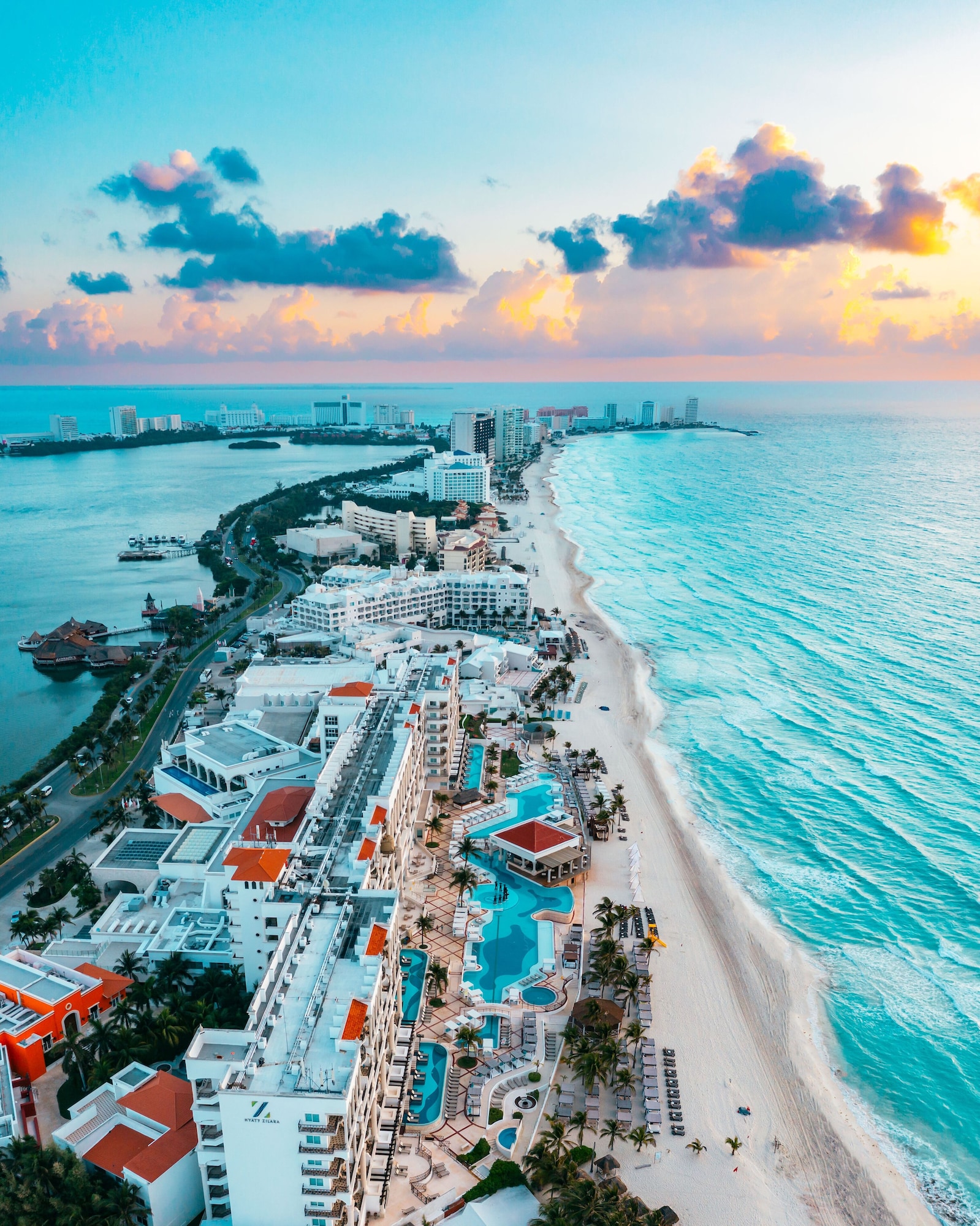
Hyatt Zilara Cancún
Adults-only all-inclusive (9.4 on Expedia) — full spa with hydrotherapy, multiple pools, swim-up bar, live entertainment, cooking classes, and gourmet dining at multiple restaurants.
Best Hotels in Cozumel
Cozumel's west-coast resorts look out over calm, sargassum-free water with the reef just offshore. These properties offer easy access to world-class diving and snorkeling right from the beach.

Presidente InterContinental Cozumel
Private pier, professional PADI dive operation, 3 pools, full spa, multiple restaurants, snorkeling right off the dock, boat charters — the premium Cozumel resort for divers and non-divers alike.

Cozumel Palace
TOP PICKOn-site dive shop with reef access, full spa with largest treatments on the island, multiple pools, gourmet dining, cooking classes, free water sports, and sunset sailing.
Sargassum-Proof Alternatives: Cenotes, Lagoons & Reefs
Even if you're visiting the Caribbean during peak sargassum season (May–August), you're never far from incredible sargassum-free swimming. The Yucatán Peninsula has over 6,000 cenotes — natural sinkholes filled with crystal-clear freshwater — and they're completely unaffected by ocean seaweed.
Tulum might catch the most sargassum on its beaches, but its cenotes — Gran Cenote, Cenote Dos Ojos, and Cenote Calavera — are some of the most photographed swimming holes on Earth. Akumal's offshore turtle snorkeling takes place in open water beyond any seaweed accumulation. And Puerto Morelos has a protected reef park where the underwater world is pristine regardless of what's on the sand.
Pro tip: Book a cenote-and-ruins combo tour. You'll spend the day exploring Mayan history and swimming in underground rivers — sargassum will be the last thing on your mind.
Tulum Ruins, Reef Snorkeling, Cenote & Caves
Visit the Tulum archaeological site, snorkel coral reef in the Caribbean Sea, and swim through stunning cenotes.
Book on ViatorBooking via our affiliate link supports this site at no extra cost to you.
Bacalar Lagoon — known as the "Lake of Seven Colors" — is another spectacular inland option. Located about three hours south of Playa del Carmen, this freshwater lagoon has striking shades of turquoise that rival any Caribbean beach, with zero sargassum risk.
Bacalar Lagoon Tour
Explore the stunning Lake of Seven Colors, one of Mexico's most beautiful natural wonders.
Book on ViatorBooking via our affiliate link supports this site at no extra cost to you.
Frequently Asked Questions
Which side of Mexico has no sargassum?
Does Cancún have sargassum in 2026?
Is Cozumel affected by sargassum?
What months have the least sargassum in the Mexican Caribbean?
Can I still enjoy the Riviera Maya during sargassum season?
Sargassum conditions change weekly. No blog post can replace real-time data. Before you finalize any booking, check our homepage for live satellite-verified conditions at all 9 monitored beaches.
Check Live Conditions Now
Updated hourly using satellite data and webcam feeds.
View Live Conditions Map

