Sargassum Season Peak Months: When Is It Worst Across the Riviera Maya?
Last updated: April 2026 · Covering Cancún, Playa del Carmen, Tulum, Cozumel & Isla Mujeres
Sargassum doesn't hit every beach the same way — or at the same time. Playa del Carmen and Tulum can be heavy while Cozumel is crystal clear. This guide breaks down the peak months beach by beach so you can plan your Riviera Maya trip around the seaweed calendar, not just the season.
Jump to a destination
The Riviera Maya Sargassum Calendar at a Glance
Before diving into each destination, here's the regional picture. Sargassum in the Riviera Maya originates in the open Atlantic — it's carried westward by the North Equatorial Current and pushed onto Caribbean shores by prevailing trade winds. The result is a seasonal pattern that's fairly predictable at the regional level, even if beach-level conditions shift week to week.
Sargassum Risk by Month — Riviera Maya Regional Average
Based on historical satellite data and beach monitoring. Island destinations (Cozumel, Isla Mujeres) run 1–2 levels lower than mainland averages.
Sargassum Level Key
The pattern holds across years: June and July are peak sargassum months across the Riviera Maya. May is the ramp-up month when conditions start deteriorating noticeably. August remains heavy before a gradual decline sets in through September and October. By November, the coast is generally clear.
What the regional average doesn't show is how differently each beach experiences this curve — and that's where destination-specific planning actually matters.
Check Today's Conditions
Live sargassum status for all 9 beaches — updated hourly.
Cancún: When Is Sargassum Season, and Which Part of the Hotel Zone?
Cancún's Hotel Zone is shaped like the number 7, and that geometry determines your sargassum experience more than the month you visit. The northern end faces north and northwest — away from the main direction of sargassum arrivals from the southeast. The southern end faces east and southeast, directly into the Caribbean current that carries sargassum toward shore.
Cancún Hotel Zone — Relative Sargassum Exposure by Section
Peak-season comparison — all sections are cleaned daily by hotel crews
For North Cancún, peak season (June–July) typically means occasional accumulation that hotel crews clear by mid-morning. It's rarely disruptive. For South Cancún, the same months can mean significant daily build-up that's hard to stay ahead of even with active cleaning.
Best months to visit Cancún for clear beaches: January, February, November, and December. If you're visiting May through August, North Cancún hotels are a meaningfully safer pick than the southern hotel zone.
Top-rated hotels in low-sargassum North Cancún:
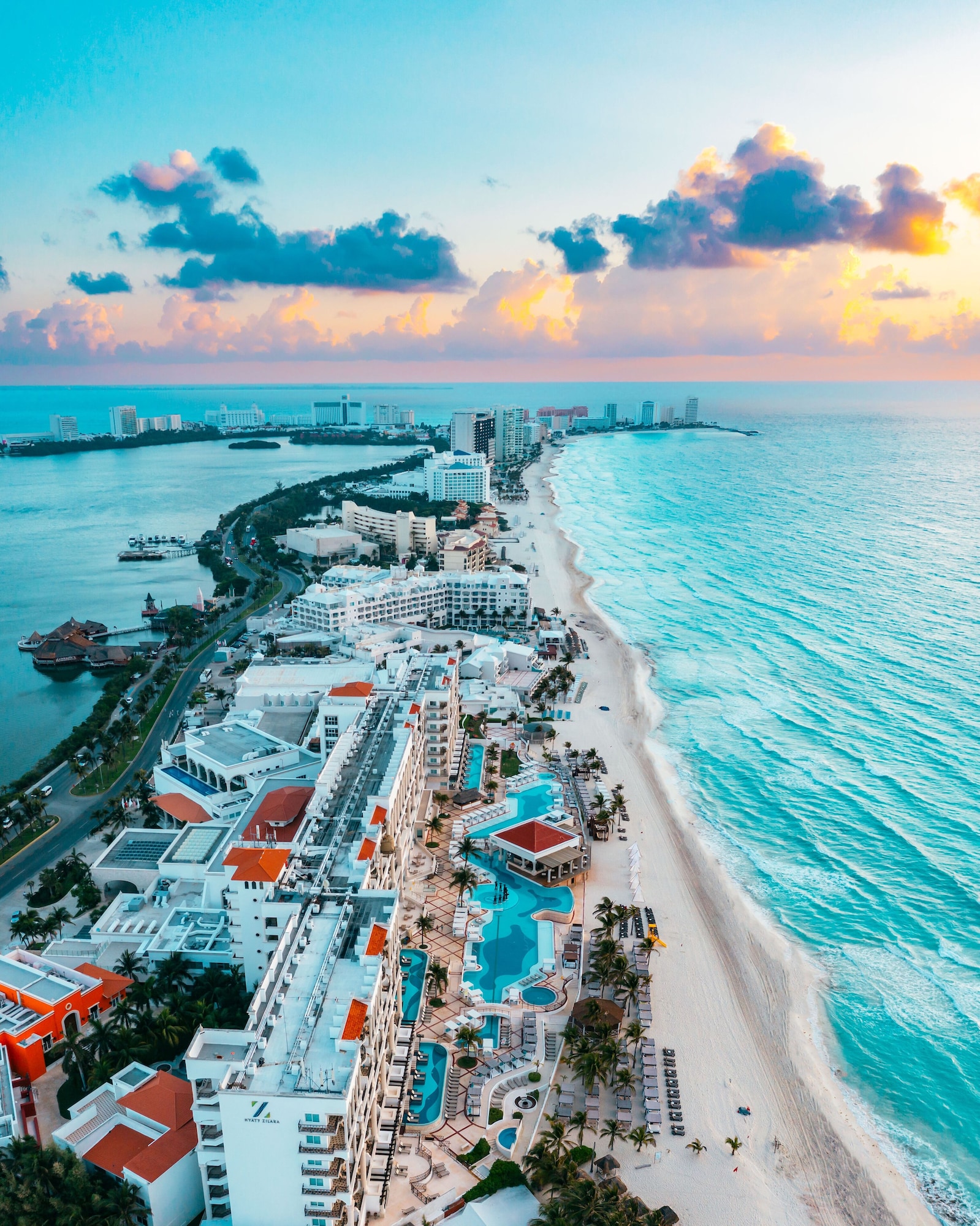
Hyatt Zilara Cancún
Adults-only all-inclusive (9.4 on Expedia) — full spa with hydrotherapy, multiple pools, swim-up bar, live entertainment, cooking classes, and gourmet dining at multiple restaurants.

Grand Fiesta Americana Coral Beach
Expedia's top-rated Hotel Zone all-inclusive — 10 restaurants, lagoon-style pool complex, the legendary Gem Spa with hydrotherapy, kids club, beach cabanas, cooking classes, and stunning Isla Mujeres views from km 9.5.
When Is Sargassum Season in Playa del Carmen?
Playa del Carmen sits on a stretch of coast that faces almost directly east — straight into the Caribbean current that carries sargassum from the south Atlantic. It's one of the more consistently affected destinations during peak months, and unlike Cancún's hotel zone, there's no protective northern orientation to retreat to.
That said, the central beach near 5th Avenue is cleaned aggressively because of tourist pressure. What you get from Playa del Carmen is managed sargassum, not absent sargassum — conditions at 7am and 2pm on the same day can look completely different.
Playa del Carmen Sargassum Season at a Glance
Safest
Jan · Feb · Nov · Dec
Shoulder
Mar · Apr · Sep · Oct
Peak Risk
May · Jun · Jul · Aug
If you're visiting Playa del Carmen during peak months, plan beach time for early mornings (when cleaning crews have worked the main stretch) and keep a Cozumel day or a cenote excursion in reserve for when afternoon conditions deteriorate.
Tulum: The Most Affected Major Beach on the Riviera Maya
Tulum consistently records the heaviest sargassum accumulation of any major destination we track. Three factors stack against it: its south-facing open coast, the absence of offshore reef structures that might break up incoming mats, and more limited heavy-equipment cleaning compared to the Cancún hotel zone.
That doesn't make Tulum a bad choice — the ruins, cenotes, jungle eco-hotels, and overall atmosphere make it extraordinary regardless of beach conditions. But it does mean calibrating expectations for beach days specifically during peak season.
Tulum's sargassum season runs April through October, with May through August being genuinely heavy. Outside those months — and particularly November through March — Tulum's beaches are among the most strikingly beautiful on the entire coast.
Tulum Peak Season Planning Note
If you're visiting Tulum between May and August specifically for beach access, build cenote days and a day trip to Cozumel as primary planned activities — not as backup plans. Treating sargassum-free alternatives as the main event during peak months is the mindset shift that makes Tulum trips work every time.
Cancún Cenote Tour
Swim in the sacred underground cenotes of the Yucatán Peninsula — crystal clear freshwater, no seaweed.
Book on ViatorBooking via our affiliate link supports this site at no extra cost to you.
Does Cozumel Get Sargassum? The Honest Answer
Yes — but the side of the island you're on changes everything.
Cozumel is oriented roughly north–south in the Caribbean Sea, about 18km off the mainland coast. The western shore faces back toward the Yucatán Peninsula. Because sargassum approaches from the southeast and east, the island itself acts as a natural shield. The town of San Miguel, the ferry pier, and nearly all resorts and dive sites are on this western, protected side.
The eastern shore faces the open Caribbean directly and receives significant sargassum during peak months. Most tourists never visit this coast — it's largely undeveloped, with rough surf and no swimming infrastructure.
Western Cozumel (Hotels & Dive Sites)
- ✓ Shielded by the island from sargassum currents
- ✓ Clear water almost year-round
- ✓ World-class reefs entirely unaffected
- ✓ Where: San Miguel, Playa Palancar, ferry pier
Eastern Cozumel (Windward Coast)
- ✗ Faces open Caribbean — heavy peak-season accumulation
- ✗ Rough surf, no swimming infrastructure
- ✗ Not where tourists stay or swim
- ✗ Where: Punta Morena, Playa Bonita, Punta Chiqueros
For practical trip planning: sargassum is not a meaningful concern for the typical Cozumel visitor. The diving, snorkeling, and beach clubs that draw people here are all on the western side and remain clean through even the heaviest mainland sargassum seasons. That's precisely why Cozumel is one of the best backup destinations when the mainland coast is under siege.
Isla Mujeres Catamaran
Cruise across turquoise waters and jump off board to swim and snorkel among the reefs.
Book on ViatorBooking via our affiliate link supports this site at no extra cost to you.
Does Isla Mujeres Get Sargassum?
Playa Norte on the northwestern tip of Isla Mujeres is one of the most consistently clear beaches in the entire region — and the explanation is geography, not luck.
The main incoming sargassum current travels from the southeast and east. Playa Norte faces north and northwest — the beach literally turns its back on the prevailing direction of sargassum arrivals. The shallow, protected bay that fronts Playa Norte also lacks the water movement needed to push mats onshore even when they pass nearby.
Isla Mujeres — Which Shores Are Protected?
Schematic — not to scale
The eastern and southern shores of Isla Mujeres are more exposed and do receive sargassum accumulation during peak months — but those aren't the swimming beaches visitors use. For all practical purposes, Isla Mujeres is the most reliable sargassum escape in the Cancún area, reachable in 15 minutes by passenger ferry.
Where to stay on Isla Mujeres:

Privilege Aluxes Isla Mujeres Adults Only
Beachfront adults-only resort with swim-up bar, beach bar, Mystique spa (Swedish massage, detox wraps), rooftop with 360-degree island views, live music, and private beach cabanas — confirmed on Expedia.

Ixchel Beach Hotel
Right on Playa Norte (top-rated beach), rooftop pool, ocean view restaurant, beach bar, water sports rental, spa treatments, and snorkeling from the beach — boutique island experience.
Akumal: Worth Planning Around During Peak Season
Akumal Bay is famous for sea turtle encounters, and the turtles stay regardless of sargassum — they live in the bay year-round. But the beach itself accumulates sargassum significantly during peak months, and the protected turtle habitat limits how aggressively it can be mechanically cleared.
Even when sargassum arrives, it tends to concentrate along the southern end of the beach, leaving the central and northern snorkeling areas cleaner. The turtles are typically found in the grass beds regardless of surface conditions.
Akumal's peak months mirror the regional pattern: May through August, with June–July worst. November through March is the reliable low-impact window.
All Destinations: Peak Months Comparison
| Beach | Peak Risk | Worst Months | Safest Window |
|---|---|---|---|
| North Cancún ✓ sheltered | Jun–Jul | Jan–Mar, Nov–Dec | |
| Playa Gaviota Azul | Jun–Jul | Jan–Mar, Nov–Dec | |
| South Cancún | May–Aug | Jan–Feb, Nov–Dec | |
| Isla Mujeres ✓ sheltered | Jul–Aug (minor) | Year-round (Playa Norte) | |
| Puerto Morelos | Jun–Aug | Jan–Mar, Nov–Dec | |
| Playa del Carmen | May–Aug | Jan–Mar, Nov–Dec | |
| Cozumel (W shore) ✓ sheltered | N/A (W side) | Year-round (west shore) | |
| Akumal | Jun–Aug | Nov–Mar | |
| Tulum | May–Sep | Nov–Mar |
Sargassum Level Key
Planning Tips for Sargassum Season
Book flexible dates if possible. The difference between a clear beach and a heavy accumulation day can be a single week. Shoulder months — March and October — offer significantly better odds than May through August without pushing you into peak-price January or February.
North beats south in Cancún. Within the hotel zone, geography is fate. A hotel at the northern end of the strip benefits from natural protection that no cleanup crew can fully replicate at a south-facing beach.
Islands are your best hedge. Cozumel and Isla Mujeres are structurally protected and reachable in under an hour from the mainland. Building in an island day guarantees a clear-water experience regardless of what the mainland coast is doing that week.
Water shoes for heavy-accumulation days. When sargassum is fresh-deposited, walking through it leaves a tar-like residue on bare skin and regular sandals. A quick-dry pair designed for water use is genuinely useful during peak season — both for comfort and for cleanup.
Water Shoes
Lightweight mesh water shoes that drain instantly — essential for keeping your feet safe from sargasso, sea urchins, and sharp cenote edges.
View on AmazonAs an Amazon Associate we earn from qualifying purchases.
Check conditions 2–3 weeks out. Satellite-based forecasts have real predictive value at that range. The 7-day forecast on this site is updated regularly and lets you see which beaches are trending better or worse before you finalize plans.
Frequently Asked Questions
When is sargassum season in the Riviera Maya?
Sargassum season runs from approximately April through October, with June and July being the peak months. January through March and November through December are the lowest-risk windows across the entire coast.
When is sargassum season in Playa del Carmen?
Playa del Carmen follows the regional pattern: April through October, with May through August being the most affected months. The central beach near 5th Avenue is cleaned daily, so morning conditions are typically much better than afternoons. Worst months: June and July.
Does Cozumel get sargassum?
Yes, but only on the eastern, windward coast — which is not where tourists swim or dive. Cozumel's western shore (where all hotels, dive sites, and beach clubs are) faces away from incoming sargassum currents and stays clean year-round. For practical purposes, sargassum is not a meaningful concern for most Cozumel visitors.
Does Isla Mujeres get sargassum?
Playa Norte on Isla Mujeres is one of the most consistently clean beaches in the Cancún area. The island's northwest orientation means Playa Norte faces away from the prevailing direction of sargassum arrivals. The eastern and southern shores are more exposed, but those aren't the beaches visitors use. Isla Mujeres is the most reliable sargassum escape reachable from Cancún.
When does sargassum season start and end in Cancún?
The season typically starts in late March or April, with some years seeing meaningful arrivals as early as the first week of March. The season is largely over by November. October is a genuine improvement over peak months in most years — particularly in North Cancún.
Which Riviera Maya beach has the worst sargassum?
Tulum consistently records the heaviest sargassum accumulation of any major destination we monitor. Its south-facing open coast, absence of protective reef structures, and limited heavy-equipment cleaning all stack against it during peak months. Akumal and Playa del Carmen also rank among the more affected beaches on the coast.
Check Live Conditions Now
Updated hourly using satellite data. Real-time sargassum status for all 9 beaches.
View Live Conditions MapRelated Guides

Sargassum Season in Cancún & the Riviera Maya: A Complete Month-by-Month Guide
Seasonal Guide · 8 min

Sargassum-Free Beaches in the Riviera Maya — The 2026 Guide
Beach Guide · 8 min

Does Sargassum Affect Snorkeling & Diving in Cozumel? (2026 Guide)
Diving & Snorkeling · 6 min

Isla Mujeres Sargassum Guide: Why Isla Mujeres Stays Clear (2026)
Destination Guide · 6 min