When Is There No Seaweed in Cancún? — Best Time to Visit Without Sargassum
Last updated: April 2026 · Based on USF Sargassum Watch System satellite data
If you've been searching for when Cancún is free of seaweed, you're not alone — it's one of the most common questions travelers ask before booking a Caribbean vacation. The good news: Cancún does have reliable low-seaweed windows every year. This guide tells you exactly which months to target, which beaches stay cleanest, and what to do if your trip overlaps with sargassum season.
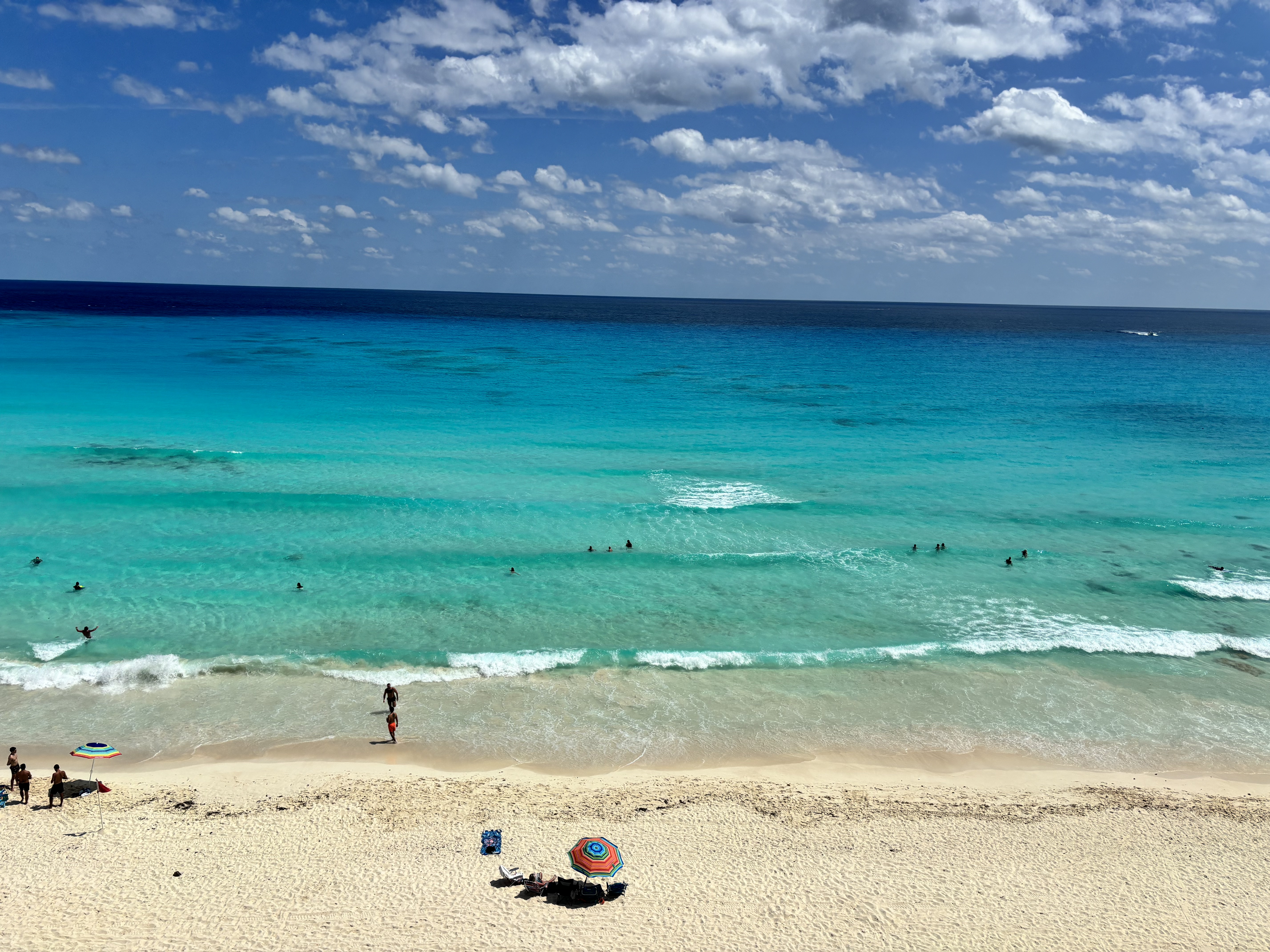
Check Today's Conditions
Live sargassum status for all 9 beaches — updated hourly using satellite data.
Why Cancún Gets Seaweed — and Why It's Seasonal
The seaweed people are asking about is sargassum — a brown floating algae that originates in the tropical Atlantic and travels westward on ocean currents before washing ashore on Caribbean-facing beaches. It's not unique to Cancún; the entire Riviera Maya coast deals with it. But the volume, timing, and which beaches are affected vary considerably.
Sargassum blooms in the Atlantic follow seasonal patterns tied to ocean temperature, nutrient upwelling, and current shifts. Satellite monitoring by the University of South Florida's Sargassum Watch System consistently shows the same basic cycle year after year: low accumulation from December through March, a gradual buildup starting in April, peak arrivals from May through August, and a slow decline through October and November.
The key insight for travelers: the seaweed doesn't arrive randomly. There are predictable windows when Cancún's beaches are genuinely clean — and predictable windows when you should adjust your expectations or your hotel location.
Month-by-Month Sargassum Forecast for Cancún
Here's what to expect at each point in the year based on multi-year satellite data and on-the-ground observations. Note that conditions can shift by two to three weeks in either direction depending on the year, so these are probability windows — not guarantees.
December – February — Lowest Sargassum
The cleanest window of the year. Atlantic sargassum mats are at their smallest, and Caribbean currents are less likely to push what little exists toward shore. Cancún beaches — especially in the north — are typically pristine. Water temperature is around 78–80°F, weather is dry and sunny, and this overlaps with peak tourist season for a reason.
March — Low Sargassum
Still an excellent window. Late March can occasionally see early arrivals in the southern hotel zone, but North Cancún and Playa Gaviota Azul remain clean. Spring break crowds are at their peak, so expect busy beaches regardless of seaweed — but the water quality is excellent.
April — Low–Moderate Sargassum
A transitional month. Early April is usually clean; late April can see the first sargassum scouts arrive in the south zone. If you're visiting in April, check our live map a week before departure and prioritize the northern beaches. In most years, April remains a good choice.
May – August — High Sargassum
Peak sargassum season. Atlantic blooms are at their largest, and Caribbean currents bring consistent arrivals to the Riviera Maya coast. South Cancún is hit hardest. North Cancún and Playa Gaviota Azul fare better due to their position on the calmer Bahía de Mujeres, but even these beaches can see occasional moderate arrivals. If you must travel during these months, see our strategy section below.
September – October — Moderate Sargassum
Sargassum begins its decline, but this also overlaps with hurricane season. September and October can still see significant seaweed on bad years, and the weather risk from tropical storms is real. Prices are lowest of the year, but it's the highest-risk window on two fronts.
November — Low–Moderate Sargassum
Sargassum is winding down considerably. Most years, November sees clean-to-moderate conditions, especially in North Cancún. Hurricane season officially ends November 30, so late November can be a solid value window with decent odds of clear beaches.
Sargassum can shift quickly. Conditions that look clean two weeks before your trip can change. Our homepage updates hourly with satellite-verified data — bookmark it and check the week before you fly.
The Short Answer: Best Time to Visit Cancún Without Seaweed
If you're booking a trip specifically to avoid sargassum, these are your best windows — ranked by reliability:
December – February
Most Reliable
Lowest sargassum risk of the year. Also the dry season — perfect beach weather.
March
Excellent
Almost always clean. Peak season crowds but outstanding water quality.
April / November
Good with Monitoring
Usually clean — check live data the week before your trip to confirm.
Which Cancún Beaches Stay Cleanest?
Even within Cancún's hotel zone, geography matters enormously. The hotel zone is shaped like a backwards "7" — the vertical leg faces east toward the open Caribbean (where sargassum arrives), while the top of the "7" curves north and faces the calmer, more protected Bahía de Mujeres.
The result: North Cancún and Playa Gaviota Azul consistently see less sargassum than South Cancún. During peak season (May–August), the difference can be dramatic — north zone beaches managing moderate conditions while the south is dealing with heavy accumulation.
If your dates overlap with the sargassum shoulder season (April, October, November), booking a hotel in the northern half of the hotel zone is the single most impactful thing you can do to protect your beach experience.
Tip: When searching hotels, filter for the "Cancún Hotel Zone — North" or "Kukulcán Plaza area." These neighborhoods correspond to the bay-facing stretch with the least seaweed exposure.
Where to Stay: Top Hotels in North Cancún
These properties sit in the northern hotel zone — the part of Cancún that stays cleanest during sargassum season. Both offer direct beach access on the bay-facing side, where seaweed exposure is naturally lower year-round.
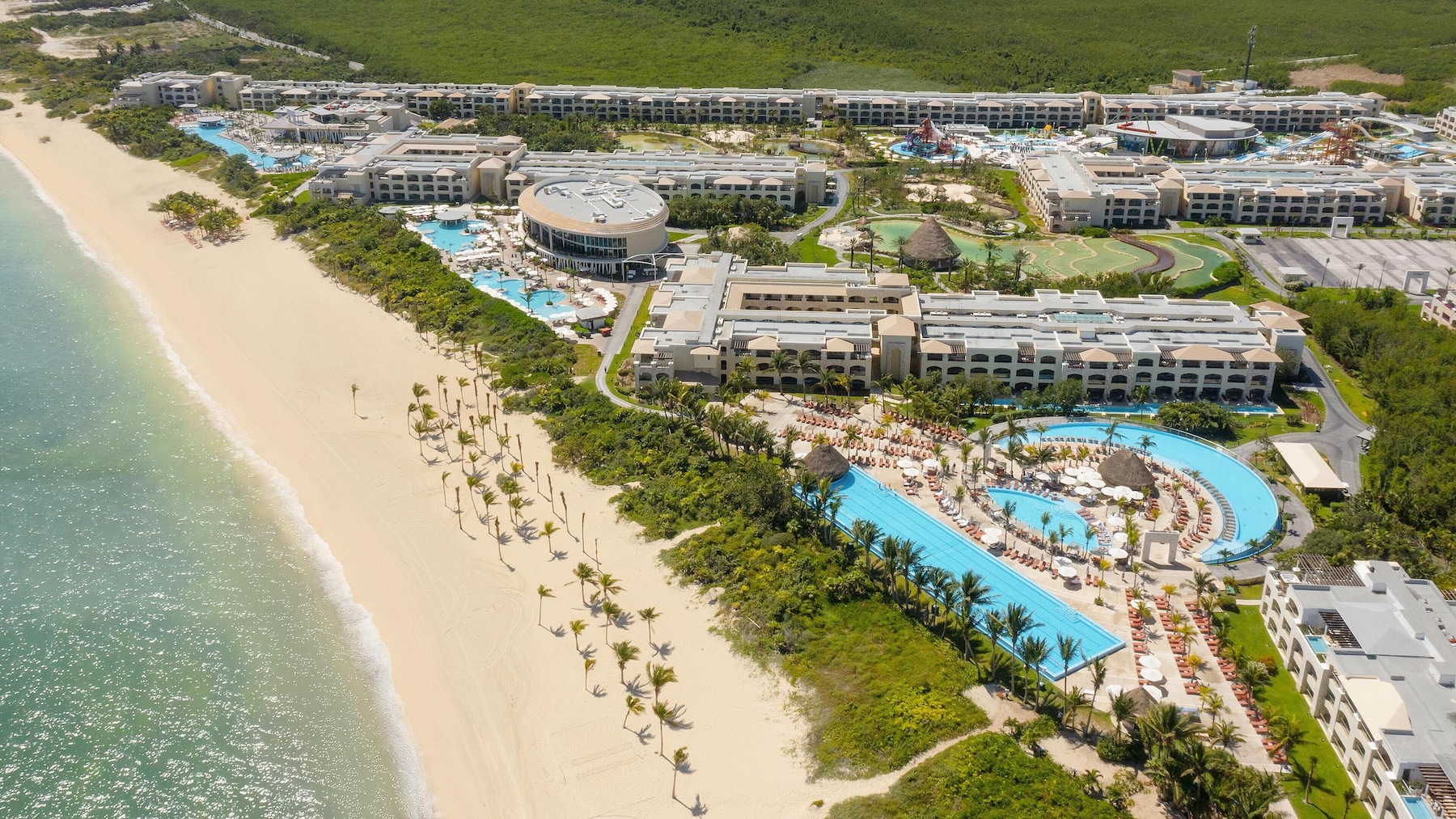
Moon Palace The Grand Cancún
TOP PICK27-hole Jack Nicklaus golf, full waterpark, 12 restaurants, 5 swim-up bars, marina, bowling, nightclub, and AWE Spa — one of the most amenity-packed resorts in Cancún.
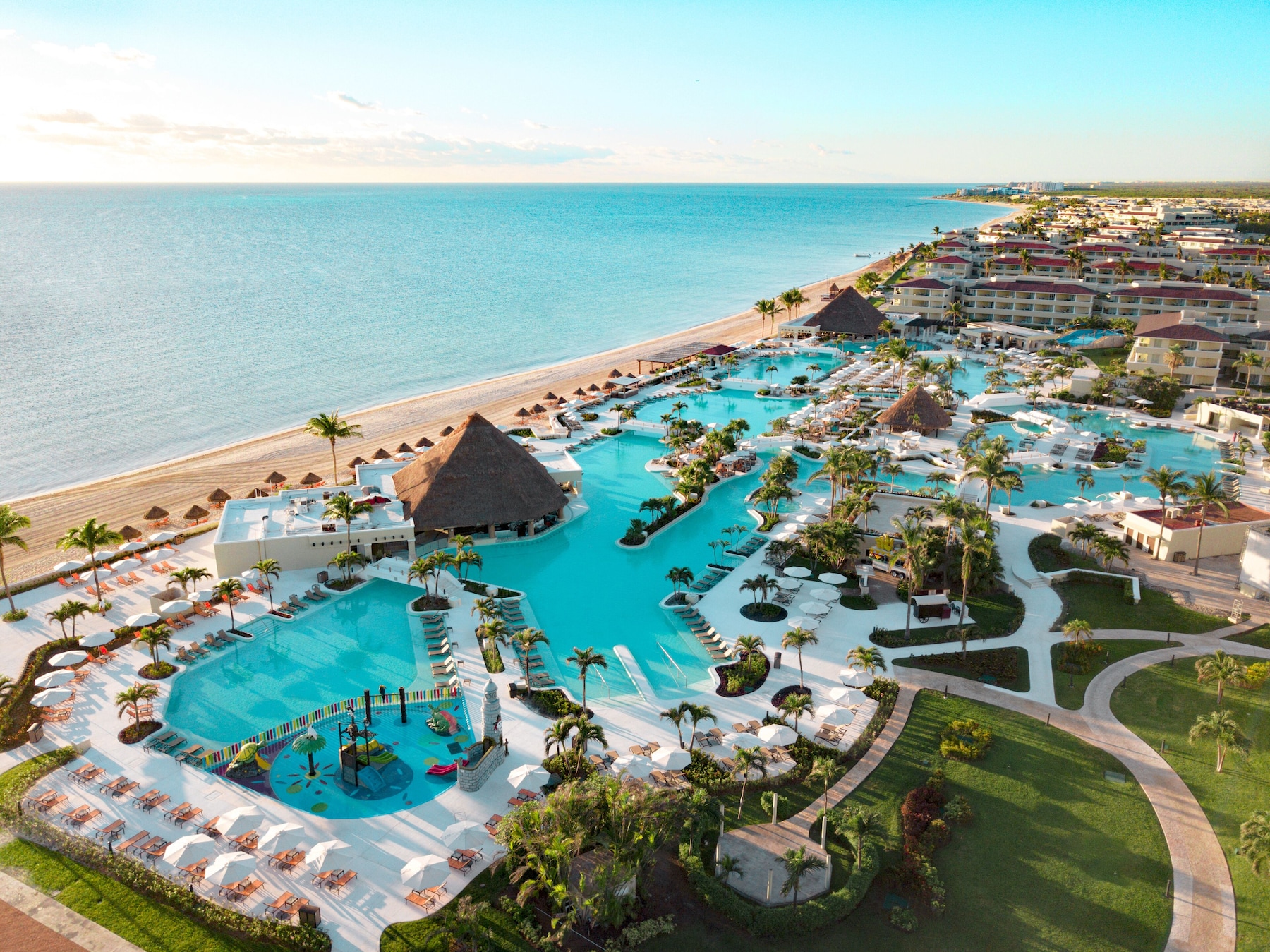
Moon Palace Cancún
27-hole golf, 7 pools, 16 restaurants, 9 swim-up bars, waterpark with FlowRider, spa, marina, and beach volleyball — the full Palace Resorts experience.
Two Islands Near Cancún That Almost Never Have Seaweed
If you want to maximize your odds of crystal-clear water — regardless of your travel dates — the two islands just offshore from Cancún are your best allies.
Isla Mujeres — 20 Minutes from Cancún
Isla Mujeres is the closest Caribbean island to Cancún, reachable by public ferry in about 20 minutes from Puerto Juárez. Its famous Playa Norte faces north and west, which means incoming sargassum currents — traveling from the east and southeast — largely bypass it. This beach is one of the most consistently clear in the entire Riviera Maya, even during peak sargassum months.
A day trip from your Cancún hotel to Isla Mujeres is an excellent insurance policy: even if your hotel beach has seaweed, Playa Norte almost certainly won't. The island also has great snorkeling at Manchones Reef, golf carts to explore, and excellent seafood restaurants.
Isla Mujeres Catamaran
Cruise across turquoise waters and jump off board to swim and snorkel among the reefs.
Book on ViatorBooking via our affiliate link supports this site at no extra cost to you.
If you want to stay on the island rather than just day-trip, Isla Mujeres has a small but excellent range of hotels — from boutique luxury to relaxed beachfront stays, all within walking distance of Playa Norte.
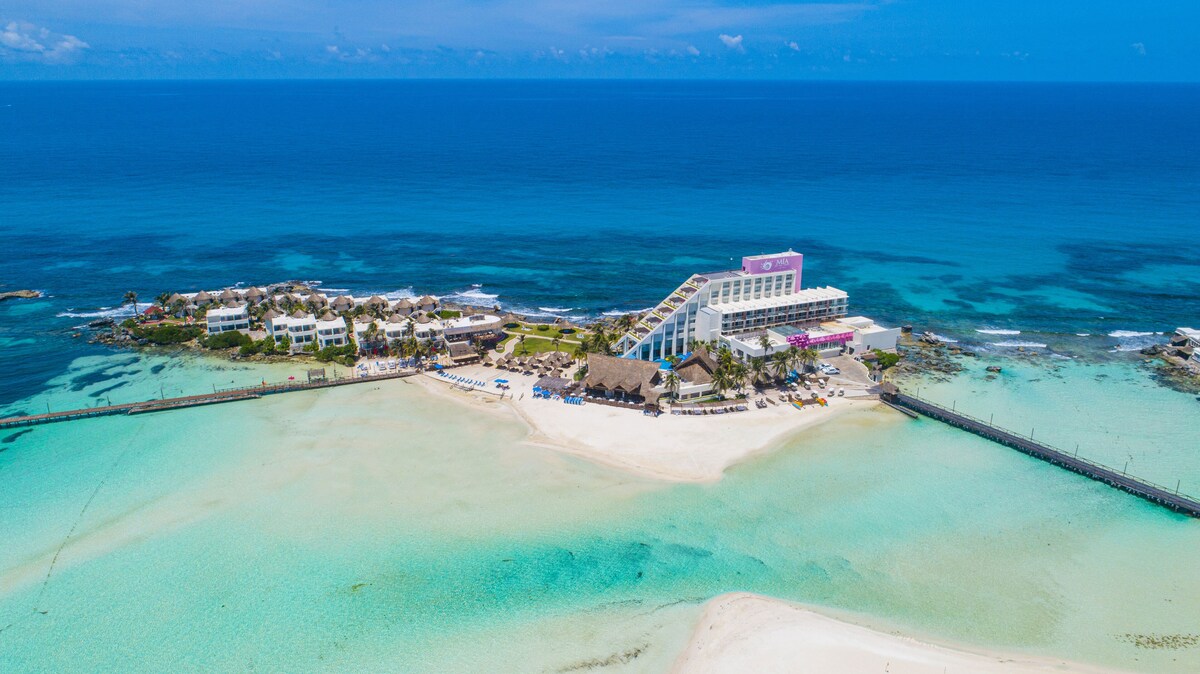
Mia Reef Isla Mujeres
TOP PICKOverwater bungalows right on Isla Mujeres with private reef access — infinity pool, swim-up bar, all-inclusive, snorkeling gear, kayaks, paddleboards, and sweeping ocean views. Adults-only and the only overwater bungalow experience in the area.

Privilege Aluxes Isla Mujeres Adults Only
Beachfront adults-only resort with swim-up bar, beach bar, Mystique spa (Swedish massage, detox wraps), rooftop with 360-degree island views, live music, and private beach cabanas — confirmed on Expedia.
Cozumel — A Ferry or Flight Away
Cozumel is Mexico's largest Caribbean island and arguably the most sargassum-protected. Its main tourist beaches face west — directly away from the Atlantic currents that carry sargassum — and the Mesoamerican Reef running along its eastern shore acts as a physical barrier. You can visit Cozumel via a short ferry from Playa del Carmen or a quick domestic flight from Cancún airport.
Cozumel is also home to world-class reef diving and snorkeling. The visibility in the channel between Cozumel and the mainland is some of the best in the Caribbean. If sargassum is your primary concern and you haven't decided between Cancún and Cozumel, Cozumel offers a meaningfully lower-risk experience every month of the year.
Cozumel Snorkel & Reef Tour
Explore the famous Mesoamerican Reef — one of the world's best snorkeling sites.
Book on ViatorBooking via our affiliate link supports this site at no extra cost to you.
Cozumel's west-coast resorts look directly out over calm, reef-protected water. Staying here puts you steps from the best snorkeling and diving in the Caribbean, with sargassum as close to a non-issue as anywhere in the region.

Cozumel Palace
TOP PICKOn-site dive shop with reef access, full spa with largest treatments on the island, multiple pools, gourmet dining, cooking classes, free water sports, and sunset sailing.

Presidente InterContinental Cozumel
Private pier, professional PADI dive operation, 3 pools, full spa, multiple restaurants, snorkeling right off the dock, boat charters — the premium Cozumel resort for divers and non-divers alike.
What to Do If Seaweed Shows Up During Your Trip
Even if you time your trip perfectly, a surprise sargassum arrival is always possible. Here's how experienced Cancún travelers handle it without letting it ruin the trip:
Take a day trip inland. The Yucatán Peninsula has over 6,000 cenotes — natural sinkholes filled with crystal-clear freshwater. They are completely, permanently unaffected by ocean seaweed. Chichen Itza, Cobá, Tulum Ruins, and Valladolid are all within 1–3 hours. One of the most popular combos is Chichén Itzá plus the Ik Kil cenote — a full day of Mayan history and swimming in a stunning natural pool.
Chichén Itzá + Cenote Day Trip
Full-day tour to the iconic Mayan ruins with a swim in Ik Kil cenote and lunch in Valladolid.
Book on ViatorBooking via our affiliate link supports this site at no extra cost to you.
Head to the underwater museum. The MUSA (Museo Subacuático de Arte) is one of the world's largest underwater sculpture parks, located just off Cancún's coast. Snorkeling or diving the museum is completely unaffected by surface sargassum — the sculptures are 3–8 meters below the waterline. It's a genuinely spectacular experience and a popular fallback on heavy seaweed days.
Underwater Museum
An underwater sculpture park of 500+ life-size works between Cancún and Isla Mujeres. Snorkel, dive, or take a glass‑bottom boat to see art turning into reef, with schools of fish and clear Caribbean water.
Book on ViatorBooking via our affiliate link supports this site at no extra cost to you.
Take the Isla Mujeres ferry. As discussed above, Playa Norte on Isla Mujeres stays clean even when Cancún beaches don't. The 20-minute ferry ride from Puerto Juárez costs around $10 USD round trip. Keep this option in your back pocket — it's the most reliable same-day escape when your hotel beach has a bad morning.
Packing Smart: What to Bring for a Cancún Beach Trip
Whether you're visiting during the cleanest window of the year or hedging during shoulder season, one item is non-negotiable anywhere on the Mexican Caribbean coast: reef-safe sunscreen. Mexico banned non-reef-safe sunscreens in its national marine parks in 2021, and Cancún's Hotel Zone beaches are part of a federally protected coastal zone. Standard chemical sunscreens with oxybenzone and octinoxate are not permitted.
Reef Safe Mineral Sunscreen
Reef/cenote safe, mineral-based SPF 50. Required at many cenotes and recommended throughout the Riviera Maya.
View on AmazonAs an Amazon Associate we earn from qualifying purchases.
Frequently Asked Questions
When is there no seaweed in Cancún?
What is the best time to visit Cancún without the seaweed?
What months are worst for seaweed in Cancún?
Is there seaweed in Cancún in December?
Which Cancún beach has the least seaweed?
Sargassum conditions change weekly. No blog post can replace real-time data. Before you finalize any booking, check our homepage for live satellite-verified conditions at all 9 monitored beaches.
Check Live Conditions Now
Updated hourly using satellite data and webcam feeds for all 9 beaches.
View Live Conditions MapRelated Guides

Best Time to Visit Cancún in 2026 — Month-by-Month Guide
Travel Guide · 10 min

Best Beaches in Mexico With No Sargassum — 2026 Guide
Beach Guide · 9 min

Best Hotels in Cancún With No Sargassum — All-Inclusive 2026
Hotel Guide · 8 min

Sargassum Season in Cancún & the Riviera Maya: Month-by-Month Guide
Seasonal Guide · 8 min